
TODO — client name, or leave blank · 2026
A reusable book engine dressed as a grimoire. Drop your pages in, publish it anywhere, and it reads like a bound volume on any device — exhibition guide, museum tour, sheet music, a children's story, a birthday card.
- Role
- Design + Build + Delivery
- Client
- TODO — client name, or leave blank
- Discipline
- Product, Full-stack, Interaction, Shipped
Most guides end up as a PDF nobody opens. This one is a book you unseal and turn. And it is not a one-off — it is a template. Your content goes in; the binding, the page-turn and the opening animation come with it.
The real build, running in this page — break the seal and turn the pages
- 01One self-contained HTML file. No framework, no build step, no server — it opens from a USB stick at the venue and from a URL afterwards.
- 02Anything with a browser can read it: laptop, tablet, phone, the screen in the lobby.
- 03A built-in editor. Add a chapter, upload the artwork, write the caption — the book updates. Everything stays in the browser and travels as a single JSON file.
- 04Two editions from one core: a data-driven one that sets the pages for you, and a designer edition where a finished spread drops straight in as artwork.
- 05Your own overture. The book stays sealed behind whatever opening animation you give it, so the first thing a reader meets is yours.
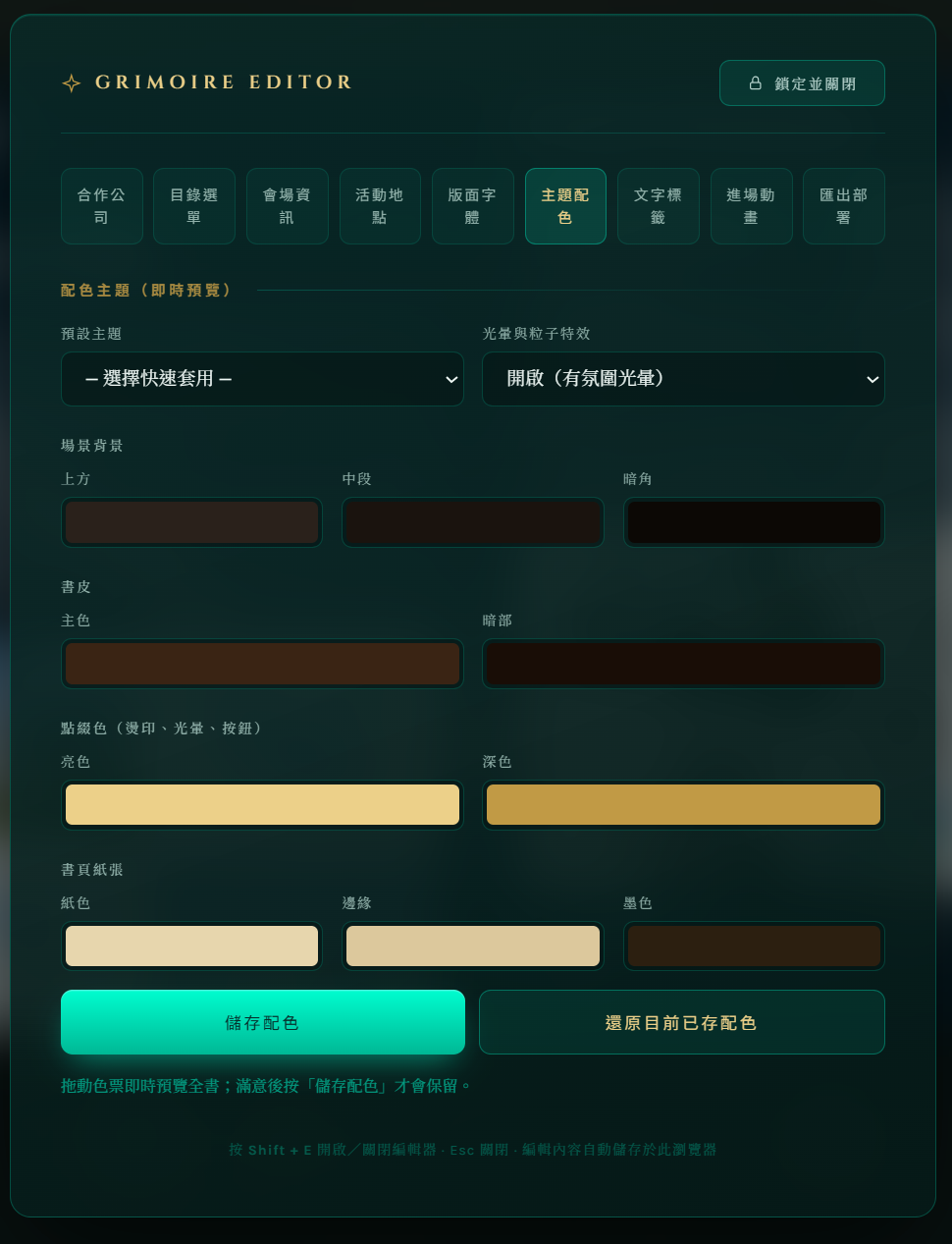
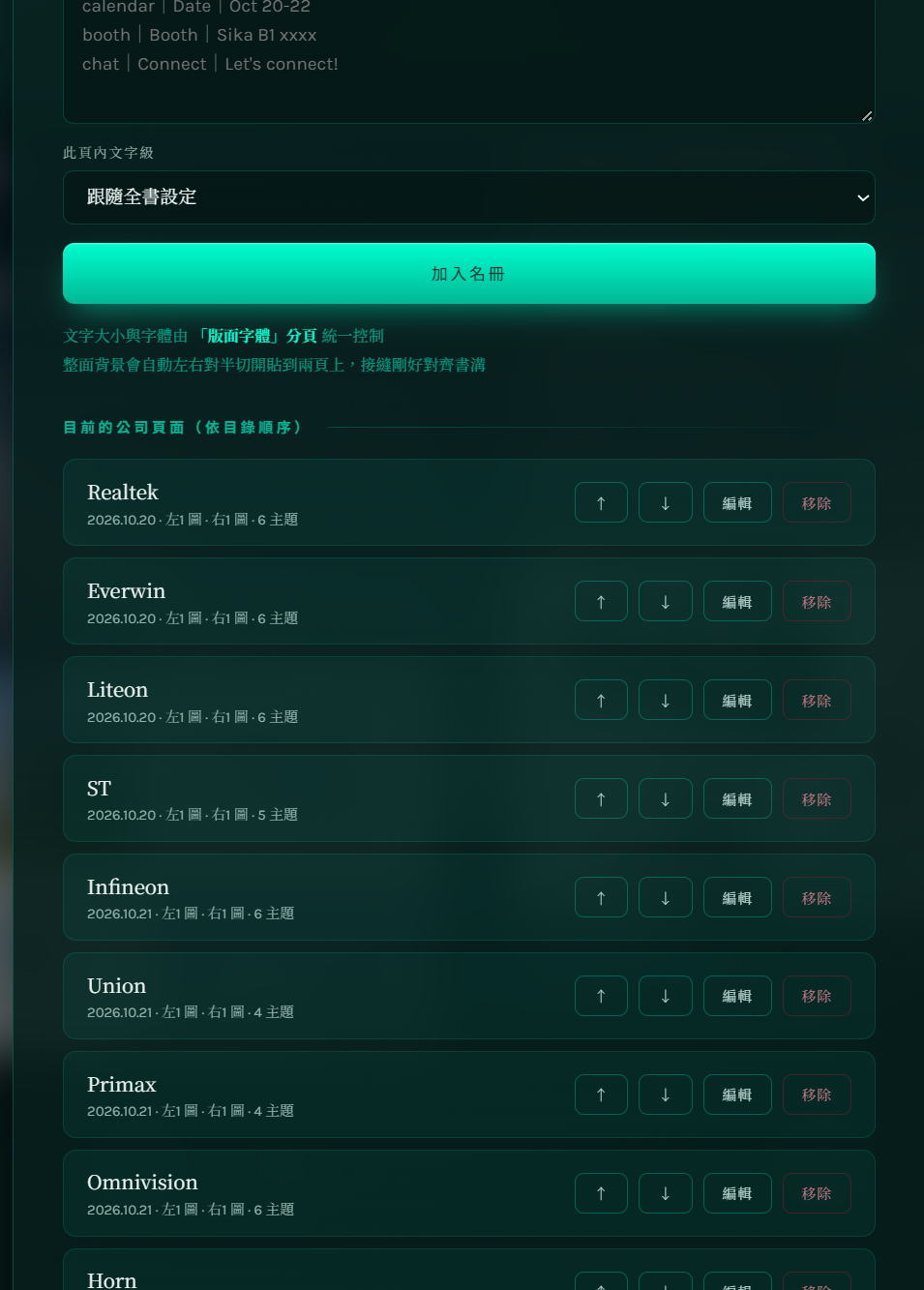
Nothing in the engine knows it is a convention handbook. It holds whatever you bind into it: an exhibition guide, a museum tour, a national park trail map, digital sheet music, a product catalogue, a children's story — or a birthday card that takes thirty seconds to read and is kept for years.
My client needed a guide for their exhibition. I could have set the pages myself and handed back a finished artefact they would have to come back to me to change. Instead I built them a templated book they can keep writing in — their own edition is the one you just turned. The engine outlived the job.
TLDR — this is the part that earns you the job, and it has to be in your words. Two or three paragraphs on the calls you made: why a book instead of a deck, why one file with no dependencies, why an editor instead of hand-setting every spread, and what you would do differently next time. Write it plainly; the work is already convincing, the writing only has to be honest.
Logitech. Contract, scope, delivery, payment: the first project taken end to end on my own. Say what changed about the way you work.
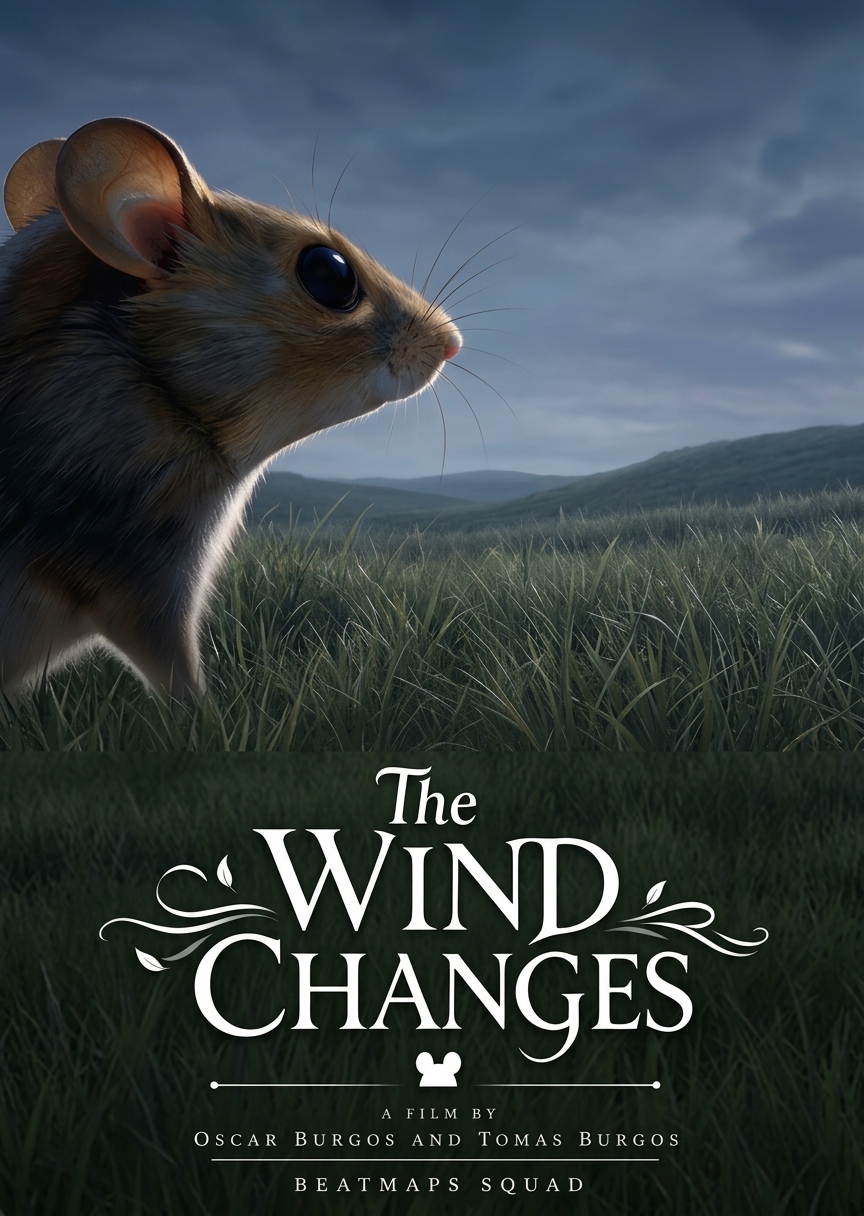
Built once for one exhibition. It will bind your pages just as happily.